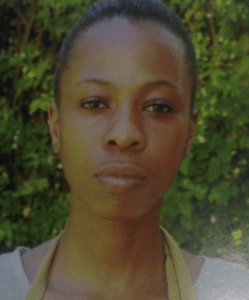
Jennifer’s work brings a dynamic and research-driven perspective to the expanding Hadzabe and Datoga Indigenous Arts Project, exploring the vital relationship between indigenous communities, environmental systems, and cultural survival.
Building on her previous field experience, Jennifer’s practice is rooted in deep community engagement and a commitment to preserving underdocumented knowledge systems that connect land, tradition, and identity. Her work examines how climate change, environmental degradation, and the destruction of natural resources are increasingly shaping the realities of indigenous life.
One of Jennifer’s most significant works within the project is Embeleko: Breaking the Walls of Maternal and Infant Death, a research-based art piece rooted in Hadzabe land and inspired by the medicinal plant Embeleko. Traditionally used by indigenous midwives, the plant is applied topically to a mother’s belly during childbirth to help ease labour. In remote medical deserts, where hospitals, surgical interventions, and emergency maternal care are often inaccessible, Embeleko represents a life-saving, non-invasive alternative grounded in generations of indigenous knowledge.
The project does not position itself in opposition to modern medicine. Instead, it calls for innovation to reconnect with its origins in nature and traditional wisdom. Jennifer’s research explores how pharmaceutical science can learn from indigenous medicinal practices to develop approaches that are safer, more accessible, and less invasive than some mechanical interventions historically used in childbirth, such as obstetric forceps, which can sometimes result in trauma for both mother and child.
This mission is embodied through a striking collage painting created using natural materials, including actual sand and soil collected from Hadzabe land. By incorporating the physical landscape into the artwork itself, Jennifer creates a direct connection between the land, the people, and the knowledge systems that have been preserved through generations.
The artwork becomes more than a visual piece; it acts as a bridge between art, science, culture, and environmental preservation. Through beauty and storytelling, Jennifer uses art as a tool to preserve indigenous scientific knowledge while imagining a future in which pharmaceutical innovation and natural wisdom work together to save lives.
At the same time, Embeleko highlights the urgent need for environmental conservation. Many medicinal plants used within indigenous communities are increasingly endangered due to climate change, deforestation, land displacement, and ecological degradation. Jennifer’s work therefore advocates not only for cultural preservation, but also for the protection of biodiversity and the ecosystems that sustain traditional healing practices.
Through her wider research, Jennifer explores how traditional medicines, rituals, cultural materials, and spiritual practices are intrinsically connected to the natural environment, revealing the profound impact ecological disruption can have on cultural continuity. Her work preserves not only stories and traditions, but also the environmental knowledge that sustains them.
Jennifer’s artistic approach combines mixed media, painting, collage, and natural materials to create powerful visual narratives that document resilience, adaptation, and the enduring strength of indigenous ecological wisdom. Her work expands the project’s mission by connecting cultural preservation with sustainability and environmental justice.
By focusing on the intersection of culture and environmental transformation, Jennifer contributes a critical lens to the broader initiative, ensuring that indigenous communities are recognized not only as cultural custodians, but also as holders of invaluable environmental and scientific knowledge.
As her body of work evolves, Jennifer is helping strengthen a growing cultural archive that preserves indigenous identity while addressing some of the most urgent contemporary challenges facing these communities.
Jennifer’s contribution supports the project by:
Preserving indigenous ecological and cultural knowledge
Exploring the impact of climate change on traditional practices
Documenting resilience, adaptation, and sustainability
Highlighting the relationship between nature and cultural identity
Expanding understanding of environmental justice through art
Contributing to the long-term preservation of underrepresented narratives
Through her work, Jennifer is making a meaningful contribution to safeguarding indigenous heritage while using contemporary art as a platform for sustainability, education, scientific dialogue, and cultural empowerment.
About Jennifer
Jennifer Msekwa is a Tanzanian interdisciplinary artist and environmental practitioner based in Dar es Salaam whose work explores the relationship between nature, indigenous knowledge systems, culture, and social change. Inspired by a lifelong connection to the environment, she creates mixed media and collage works using natural and organic materials, transforming art into a tool for environmental awareness, cultural preservation, and community storytelling.
Her practice is grounded in field research and collaboration with indigenous communities across East Africa, documenting ecological knowledge, medicinal traditions, and environmental practices that are increasingly threatened by climate change and cultural loss. Through her work, Jennifer uses art as a form of education, reflection, and advocacy, creating visual narratives that encourage sustainability, resilience, and deeper connections between people, culture, and the natural world.